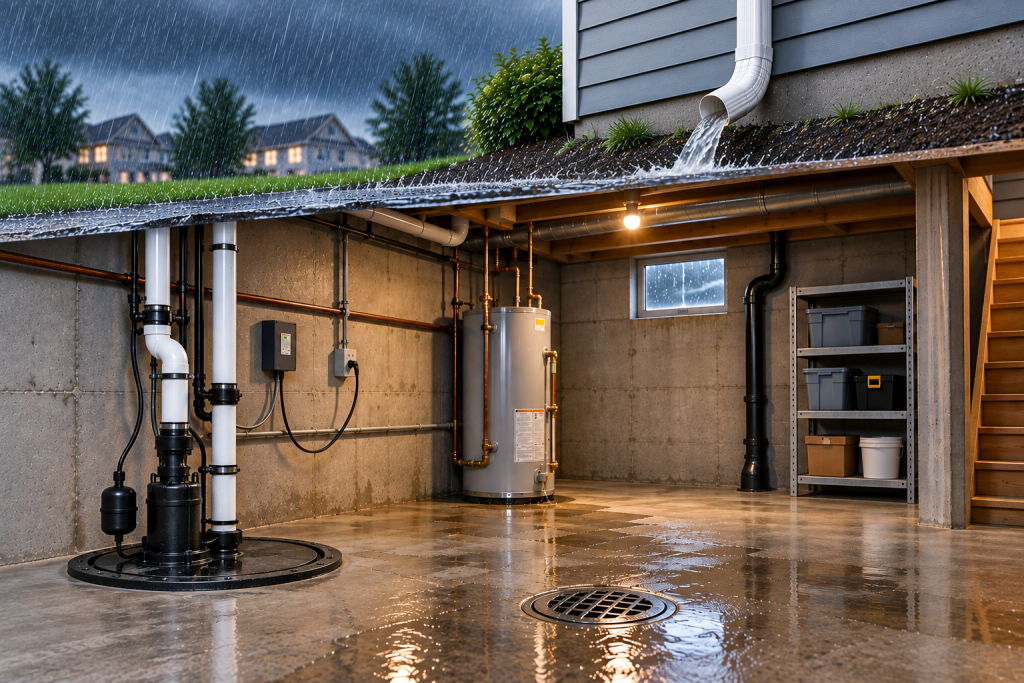
When homeowners picture a flooded basement, they usually picture the same thing: water pushing in from outside during a heavy storm. That’s a real risk, especially across the GTA where summer downpours have gotten heavier and more frequent in recent years. But it’s only half the picture. Some of the most damaging basement floods start indoors a sump pump that quietly stopped working months ago, a floor drain that’s been slowly backing up, or an aging water heater that finally gives out. The inspection that catches those problems works best when it happens before a storm, not after one, while everything still looks dry and normal.
This guide walks through what’s actually at risk in your basement during storm season, what a proper inspection covers, and how to tell the difference between a minor fix and a system that needs replacing.
Why storm season raises the stakes
A basement’s plumbing and drainage systems are built to handle typical conditions average rainfall, average groundwater levels, and equipment that’s still within its working life. Storm season pushes all three past normal at once. Heavier rainfall raises groundwater and storm sewer loads. Municipal sewer systems in older parts of Toronto and the GTA can run at or near capacity during intense storms, which is exactly when a backwater valve or a well-maintained sump pump earns its keep. And equipment that’s been quietly wearing out a water heater, a sump pump float switch, a floor drain trap tends to fail under the added stress of a storm, not on a calm afternoon.
None of this means every basement is at high risk. It means the systems worth checking are specific and identifiable, and a timely inspection is far cheaper than a wet-basement cleanup.
The three systems worth checking before a storm hits
1-Sump pumps
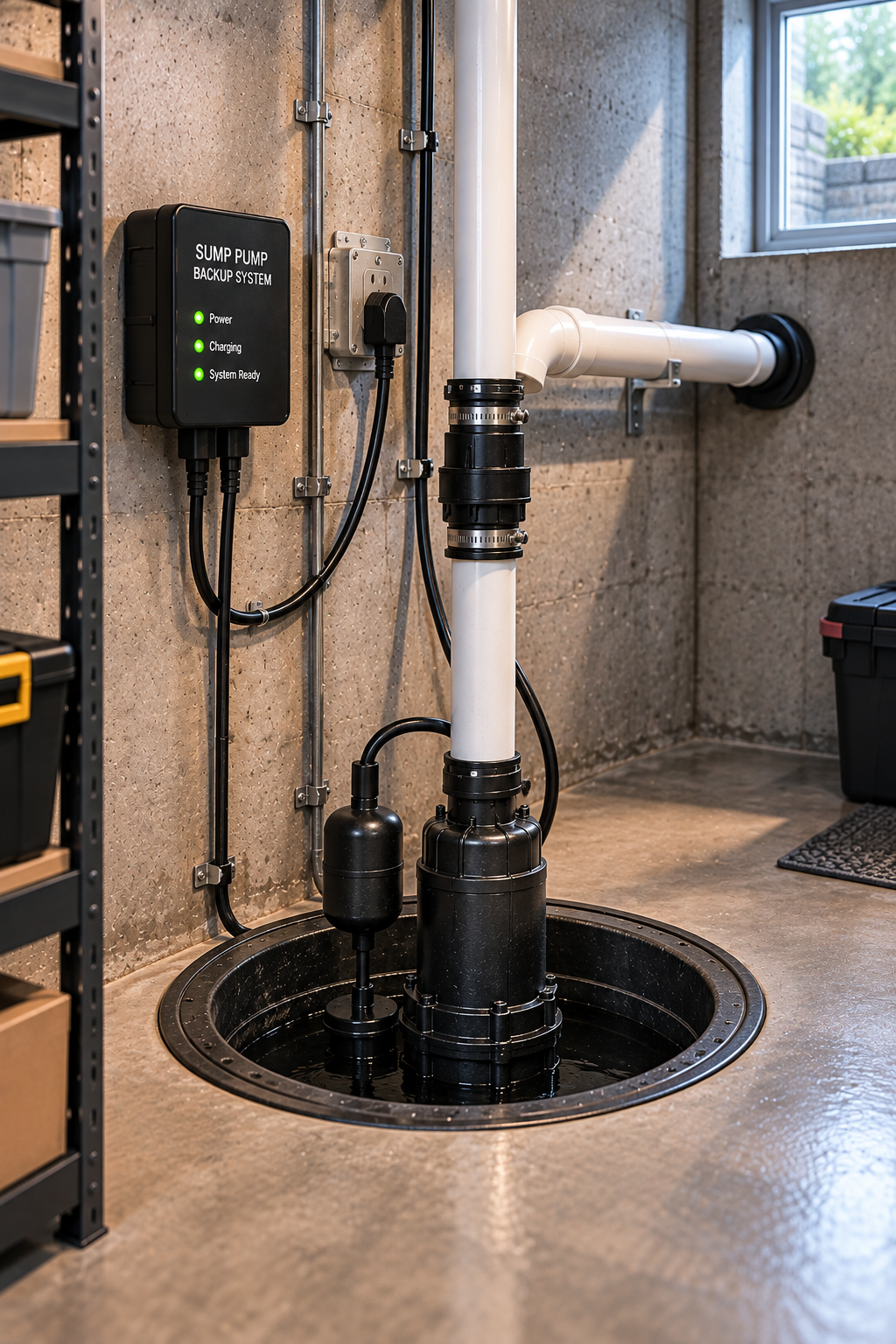
A sump pump is only useful if it actually activates when water rises and that’s the part that’s easy to miss during a routine glance at the pit. An inspection should confirm:
- Float switch response does the float trigger the pump at the right water level, every time, without sticking?
- Discharge flow is water actually being carried away from the foundation, or is the discharge line frozen, blocked, or draining back toward the house?
- Backup readiness if the power goes out during a storm (a common pairing), is there a battery backup or secondary pump, and is it actually charged and functional?
A pump that “worked last time we checked” six months ago isn’t the same as a pump verified to work today. Float switches stick, check valves fail, and discharge lines get blocked by debris or ice far more often than homeowners expect.
2-Basement floor drains
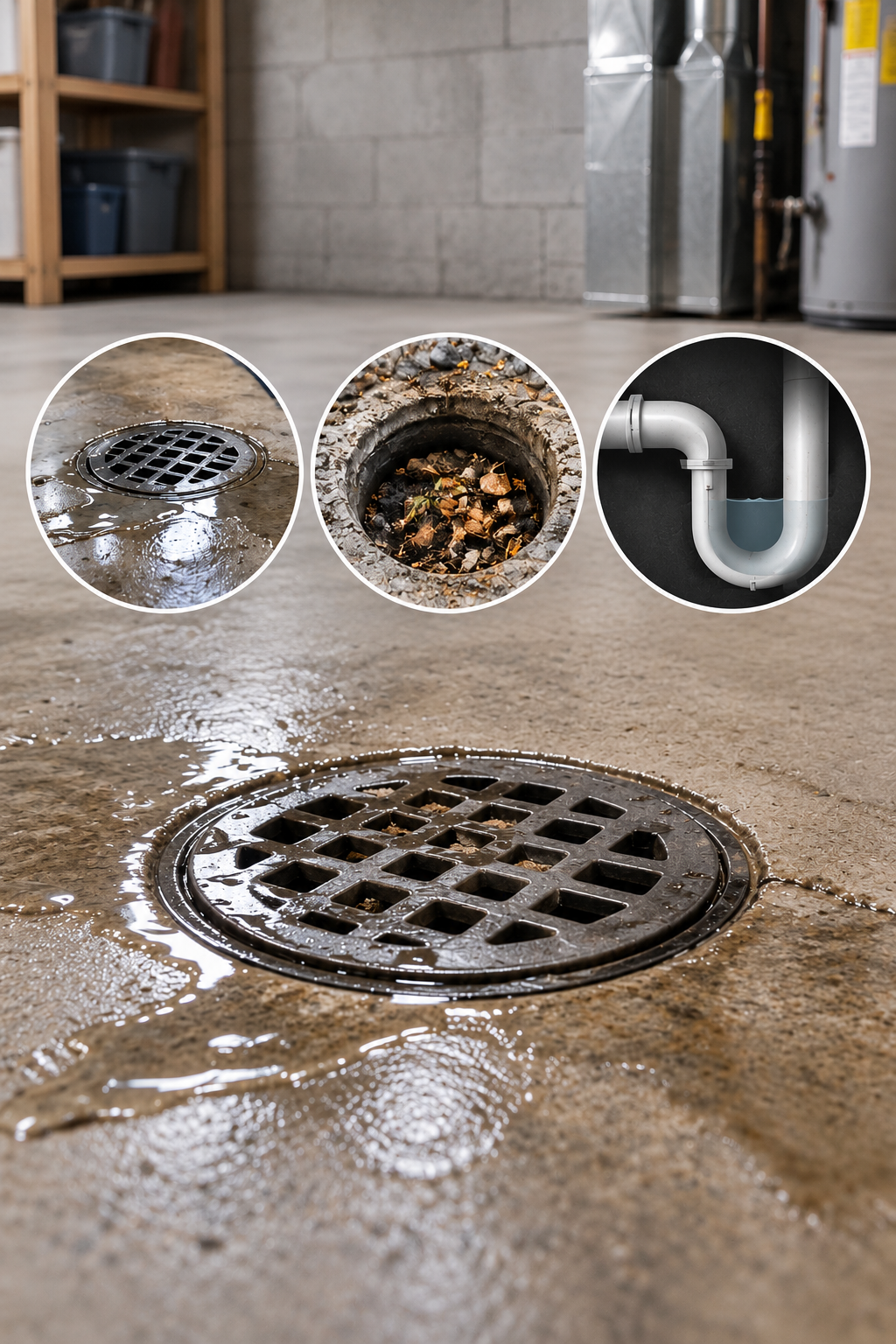
Floor drains are the basement’s last line of defense the spot where water is supposed to go if it does get in. A slow or partially blocked drain won’t necessarily show symptoms until the day you need it most. Technicians look for:
- Slow drainage or standing water that takes too long to clear
- Blockage buildup from sediment, debris, or root intrusion in older clay pipe
- A dry trap (common in drains that rarely get used), which can let sewer gas into the basement and is an easy fix once identified
3-A small drip can say more than it seems
Not every basement water problem starts with rain pushing in from outside. Often the first sign is quieter: a water heater with a light drip at the base, mineral staining on the floor around it, or moisture collecting somewhere it shouldn’t. On its own, that can look like a minor nuisance. But it’s frequently a sign of a failing tank, a loose fitting, or a pressure relief valve doing exactly what it’s supposed to do which is worth investigating before it does more.
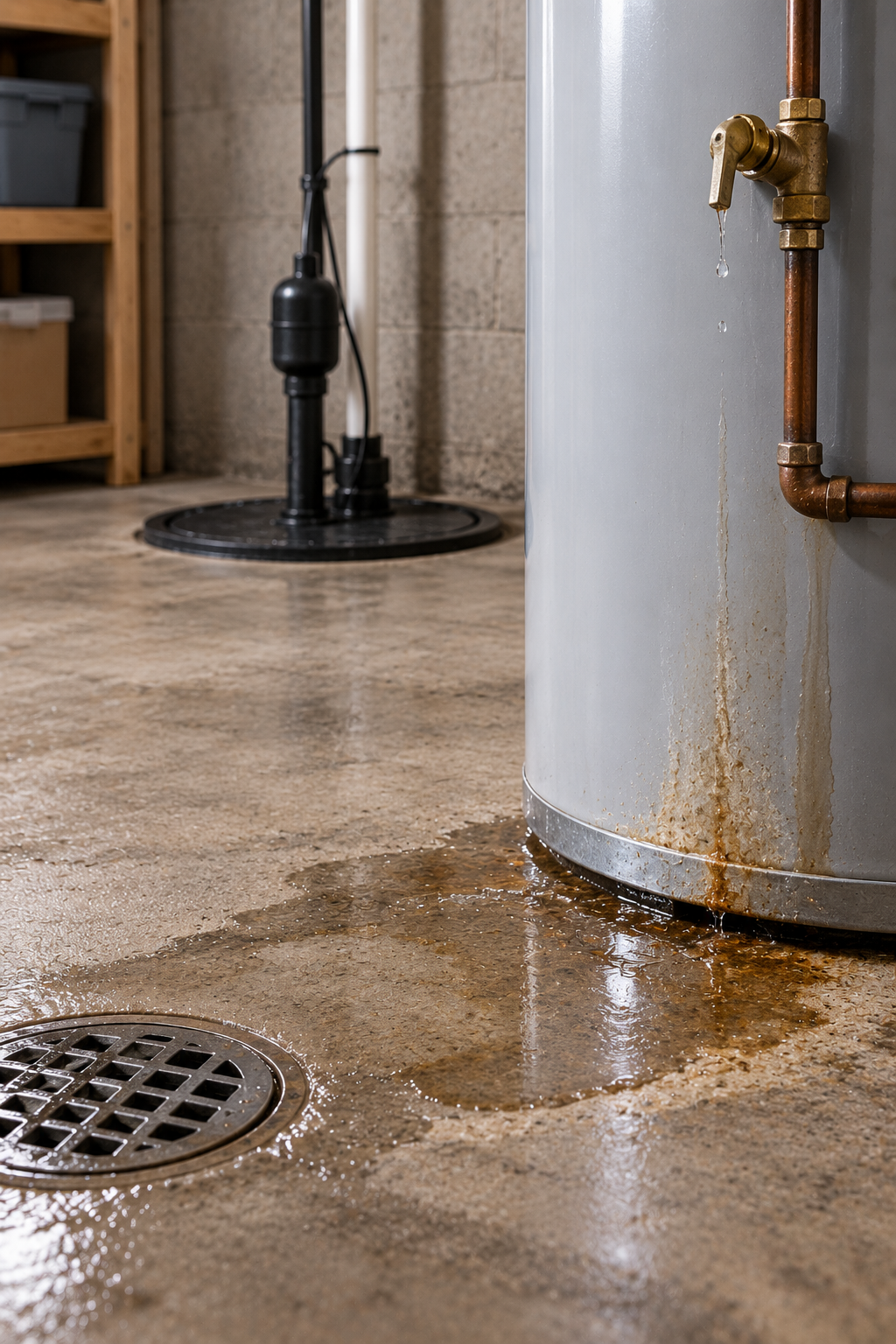
These small signals also tend to travel together. A water heater nearing the end of its service life, a floor drain that’s been draining slowly for months, and a sump pump that hasn’t been tested since it was installed can all point to the same underlying pattern: normal wear that hasn’t been checked recently. Individually, each is a straightforward, inexpensive fix. Left unchecked and combined with a heavy storm, they can turn into a much larger cleanup.
Repair or replace? A fair look at both
It’s easy to assume every basement inspection ends with a recommendation to replace something. In practice, most of what shows up is repairable:
- A sump pump with a sticking float switch usually needs a float replacement or cleaning, not a new pump.
- A slow floor drain is often a clog or trap issue that clears with proper cleaning.
- A dripping water heater with a loose fitting may just need that fitting tightened or a part replaced.
Replacement becomes the right call when the equipment itself is near or past its expected service life, when repairs have become frequent or are addressing the same failure repeatedly, or when the cost and disruption of another repair starts to approach the cost of replacing the unit outright. A water heater in its second decade of service that’s already shown a leak, for example, is a reasonable candidate for proactive replacement not because every old water heater needs replacing, but because the cost of a failed tank (versus a planned replacement) is rarely close.
A good inspection should leave you with a clear, honest answer on which category your equipment falls into, not a default push toward replacement.
Considerations for condos and multi-unit buildings
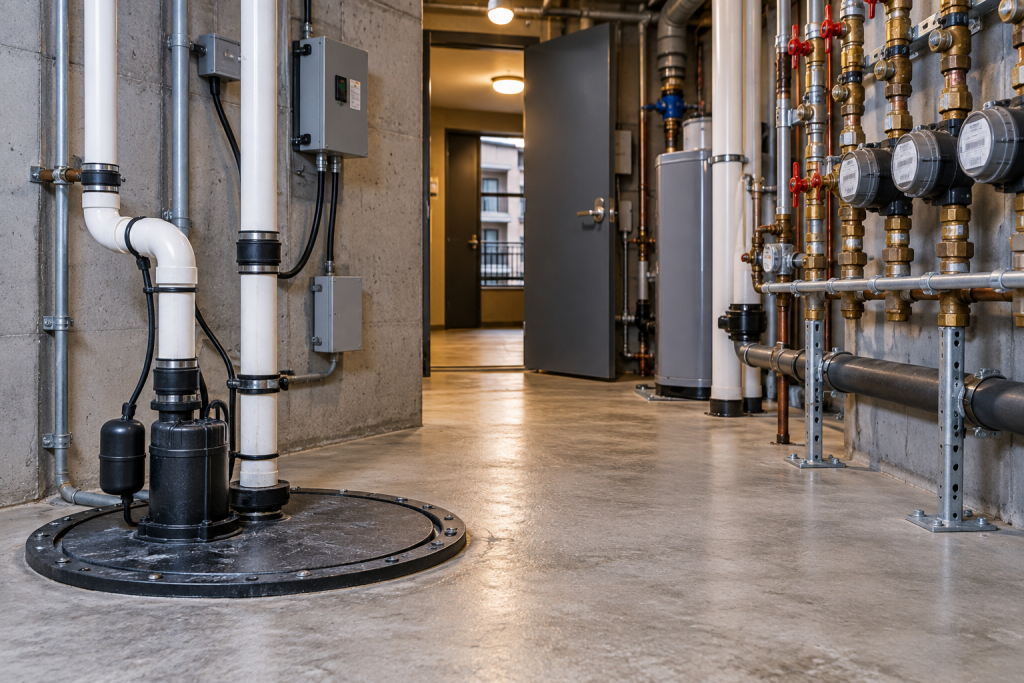
Basement and mechanical room risk looks a little different in condos and multi-unit buildings. Sump pumps and backwater valves are often shared infrastructure, sometimes tucked into a compact mechanical room with limited access. A few things worth keeping in mind:
- Shared sump pump systems may need board or property management coordination for inspection and repair scheduling.
- Mechanical room space constraints can affect what backup or redundancy options are practical.
- In older buildings, original plumbing infrastructure may be reaching an age where inspection frequency should increase, even if no issues have been reported yet.
Property managers and condo boards are often better served by a standing seasonal inspection schedule than a reactive one, given how disruptive a shared-system backup can be for multiple units at once
What a timely inspection actually gives you
The value of a pre-storm inspection isn’t a guarantee that nothing will ever go wrong it’s a clear, current picture of where your basement actually stands. That means knowing your sump pump will activate when it needs to, knowing your basement drain can handle the load, knowing whether your home is exposed to sewer backup risk, and knowing whether your water heater is a candidate for a straightforward repair or a planned replacement all while everything still looks dry and normal, and while the fixes are still simple.
Storm season is a good time to get ahead of basement risks while everything still looks fine not after water’s already found its way in. If you’re not sure whether your sump pump, basement drains, or water heater are ready for heavy rain, Empower Home Comfort can inspect your system and give you a clear, honest recommendation on what (if anything) needs attention
to book your storm season inspection.
FAQ
How often should a sump pump be inspected?
Most homes benefit from at least one inspection per year, ideally before the season when heavy rain is most likely. Homes with a history of basement moisture or a pump that’s several years old may benefit from checking it more often.
Can I test my sump pump myself?
You can do a basic check by pouring water into the pit until the float triggers the pump, but this won’t catch issues like a weak discharge line, a failing check valve, or backup battery problems that’s where a professional inspection adds value.
What's a backwater valve, and do I need one?
A backwater valve is a fitting installed on your main sewer line that allows wastewater to flow out but closes automatically to stop it from flowing back into your home during a municipal sewer surcharge. It’s most valuable in areas with a history of sewer backup during heavy rain, and some municipalities offer subsidies toward installation.
How do I know if my water heater needs to be replaced instead of repaired?
Age is the biggest factor most tank water heaters last 8–12 years. If yours is in that range and already showing signs like leaking, rust-coloured water, or inconsistent temperatures, replacement is usually more cost-effective than another repair.
Does homeowners insurance cover basement flooding?
Coverage varies significantly by policy and by the source of the water (overland flooding, sewer backup, and groundwater seepage are often treated differently). Check your specific policy or ask your insurance provider directly, since this isn’t something a general guide can answer accurately for every homeowner.
Is this a bigger concern for older homes?
Older homes are more likely to have aging clay sewer lines, no backwater valve, and equipment nearing the end of its service life, so yes but newer homes aren’t immune, especially if a sump pump or backup battery hasn’t been checked since installation.