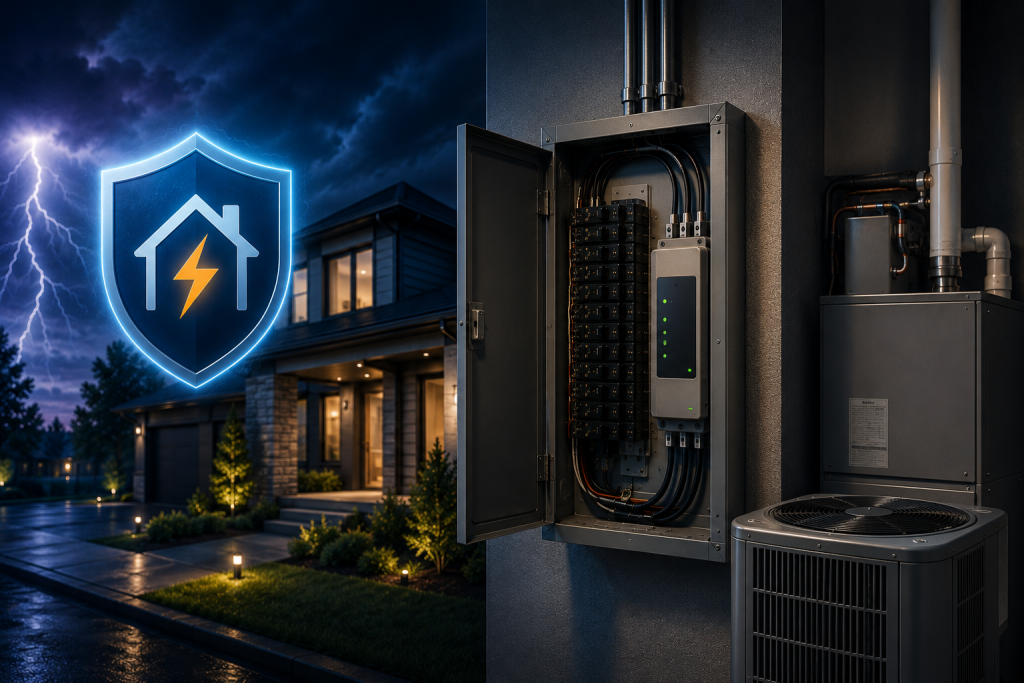
Most homeowners picture a lightning strike when they think about power surges. In reality, the surges that do the most damage over time are much smaller and much more common a brief spike when the air conditioner compressor kicks on, a fluctuation from the utility grid, or a large appliance cycling off. Those small events happen constantly, and every one of them sends a little extra voltage through the wiring that feeds your furnace, air conditioner, heat pump, and everything else plugged into your home.
Whole-home surge protection is designed to catch that excess voltage at the source the electrical panel before it can travel further into the house. For homeowners who’ve already invested in a furnace, heat pump, or central air system, it’s one of the more practical ways to protect that investment alongside the appliances and electronics used every day.
What Actually Causes a Power Surge
Not every surge comes from a storm. The most damaging ones are often invisible day-to-day events:
- Utility-side fluctuations brief voltage changes on the grid, sometimes caused by switching at a substation or a fault elsewhere on the line.
- Large equipment cycling on and off your own furnace blower, air conditioner compressor, well pump, or even a neighbour’s equipment can create small internal spikes as motors start and stop.
- Lightning and external events less frequent, but capable of sending a much larger surge through service lines all at once.
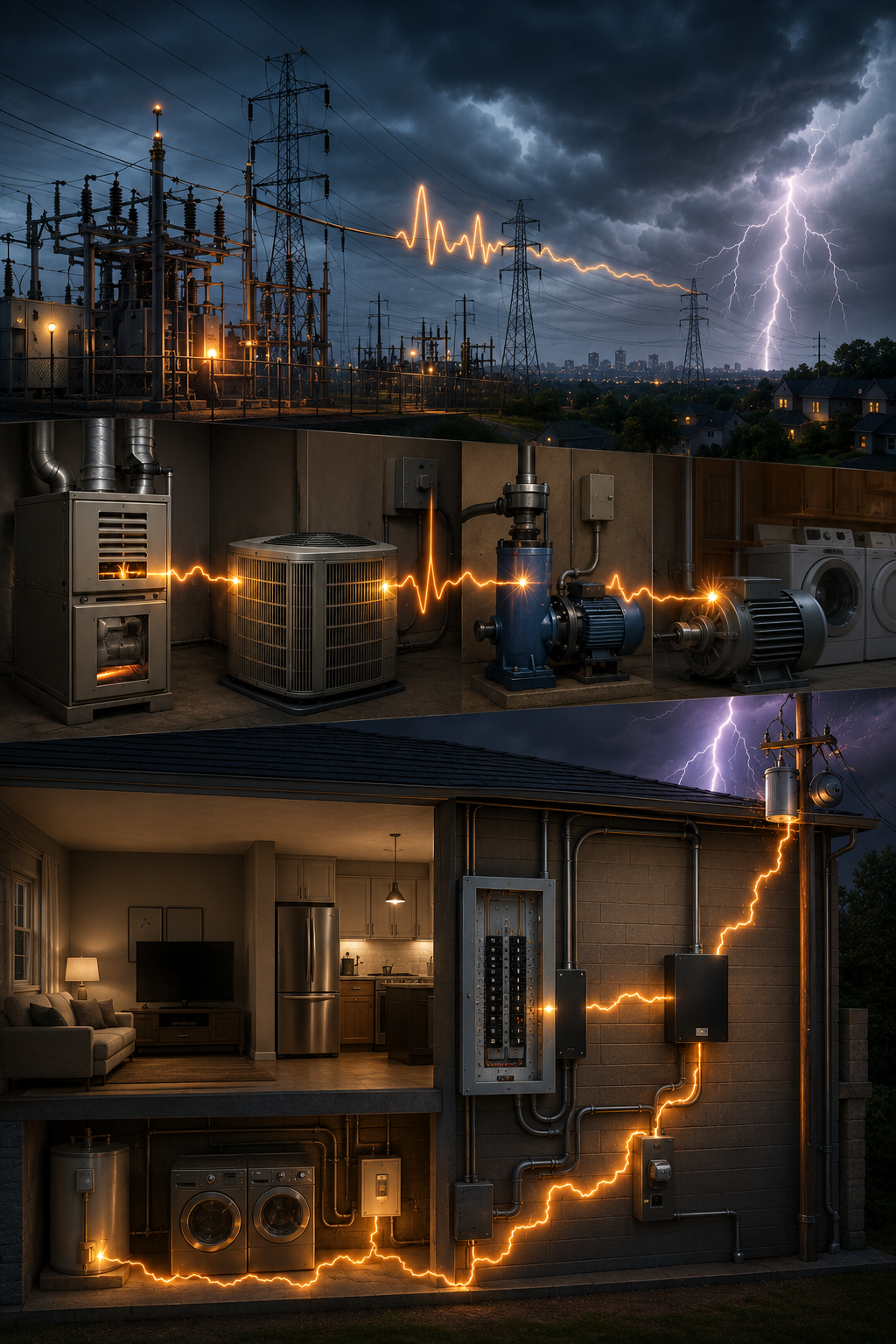
Individually, the small internal spikes rarely cause an obvious, single point of failure. The concern is cumulative components inside sensitive electronics and appliance control boards can degrade gradually with repeated exposure, shortening their expected lifespan even when nothing fails outright in the moment.
Why HVAC Equipment Is Particularly Exposed
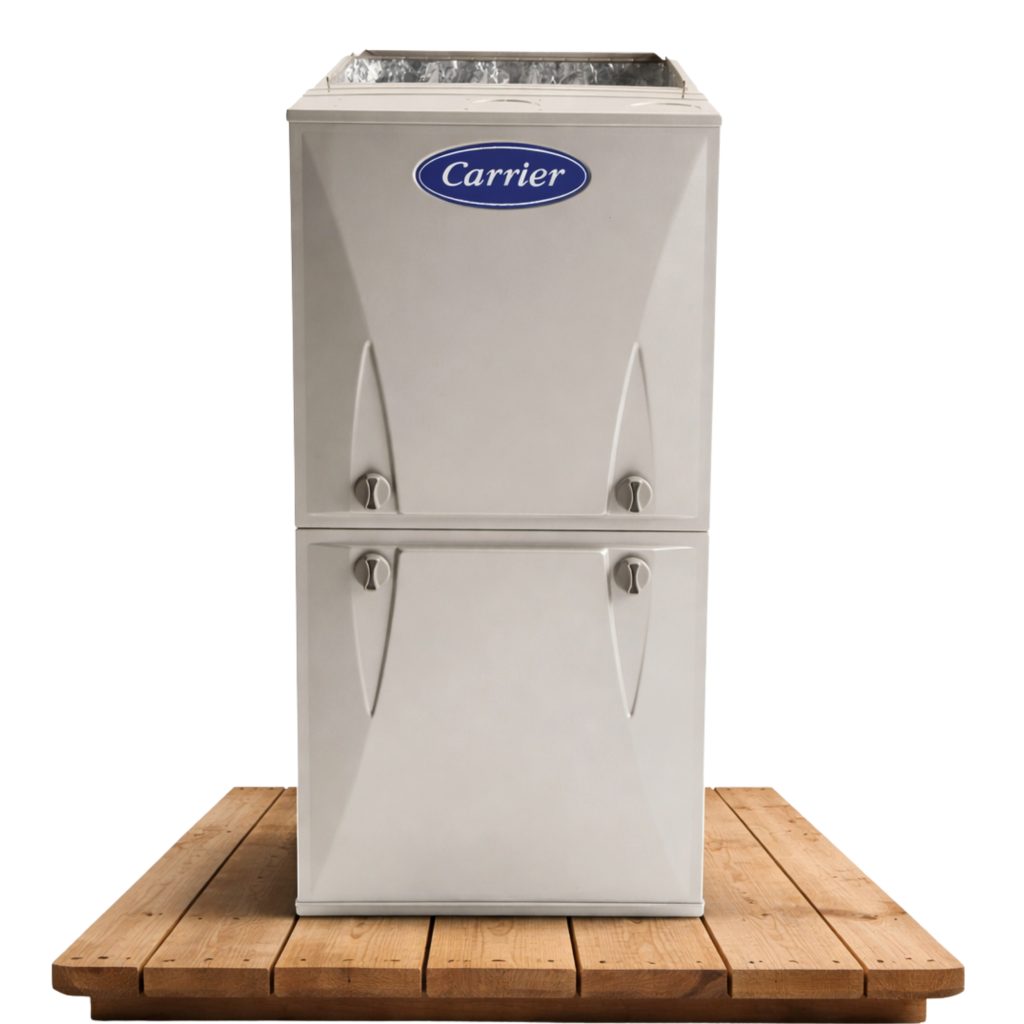
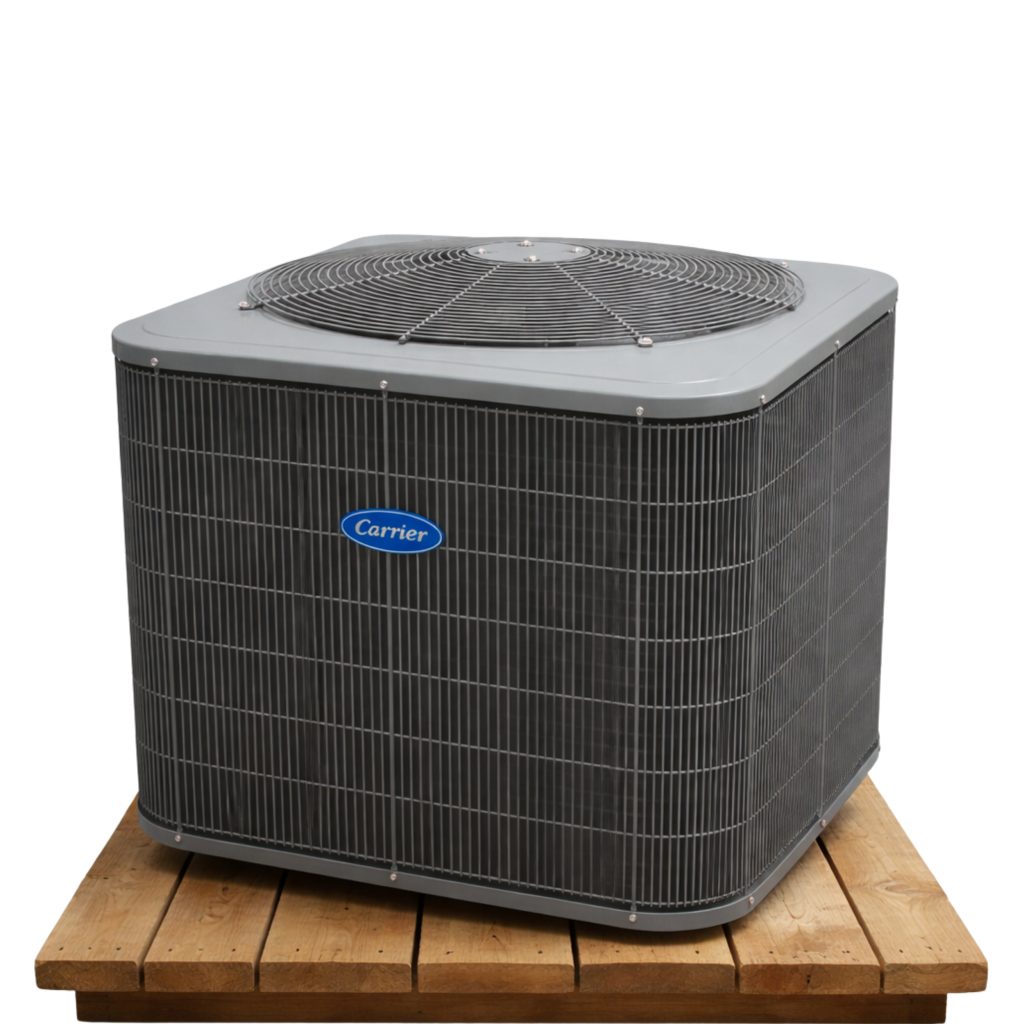
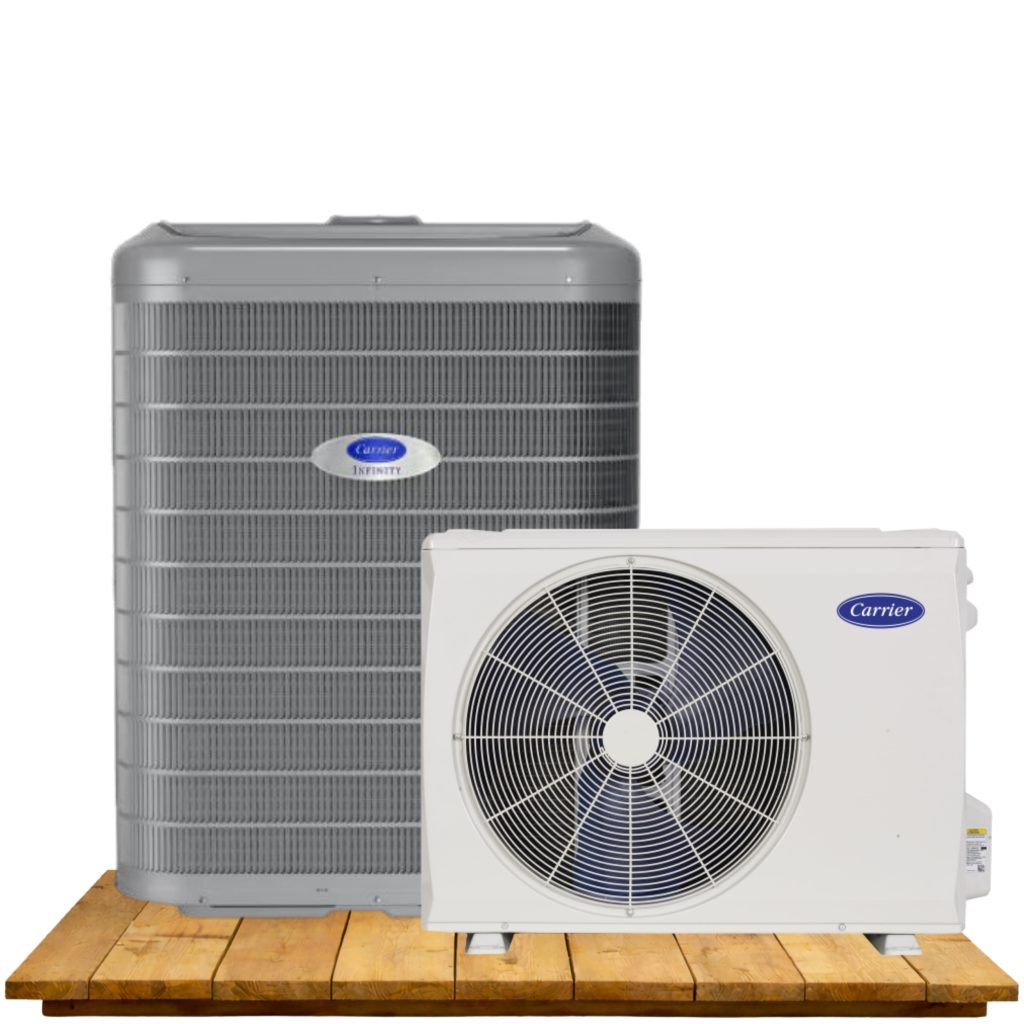
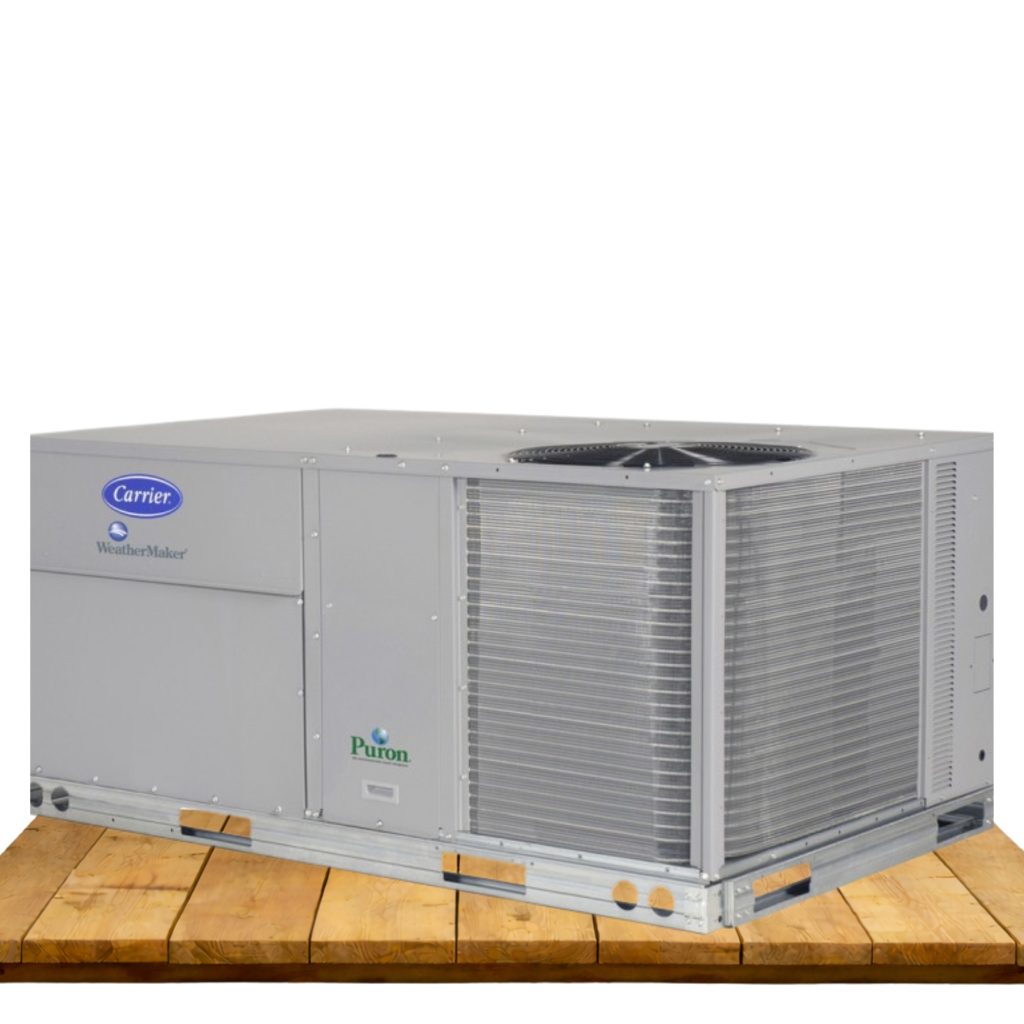
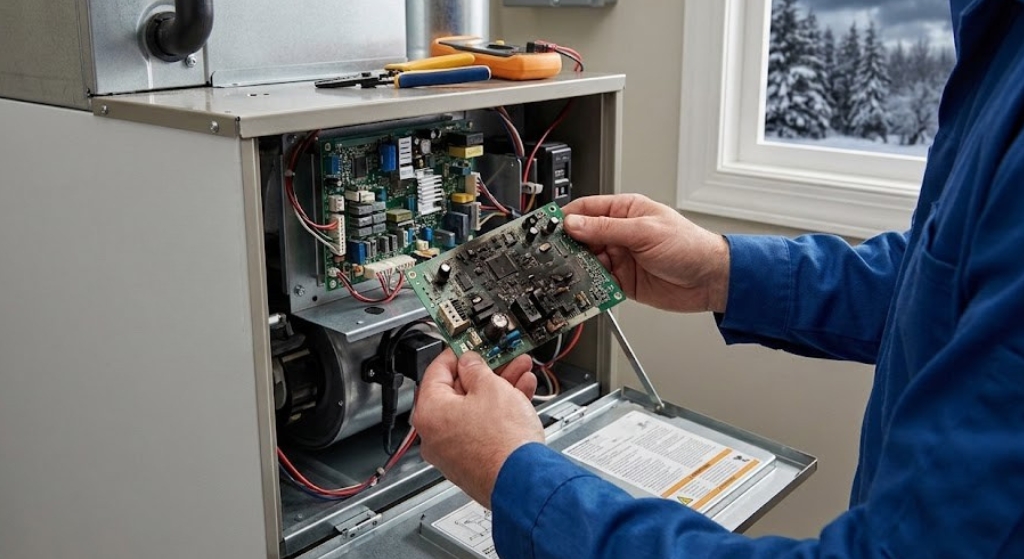
Modern furnaces, air conditioners, and heat pumps aren’t just motors and refrigerant lines anymore they run on circuit boards that manage ignition, staging, variable-speed blowers, and communication between indoor and outdoor units. Those boards are exactly the kind of component that’s vulnerable to voltage spikes, and HVAC equipment tends to sit at the front line because it’s hardwired directly into the electrical panel and cycles on and off constantly throughout the day.
A damaged control board on a furnace or heat pump is rarely a cheap fix, and replacement boards for newer high-efficiency equipment can be harder to source quickly, especially heading into the colder months. Surge protection doesn’t eliminate the need for regular maintenance or extend equipment life on its own, but it does reduce one specific risk that maintenance alone can’t address.
How Whole-Home Surge Protection Works
A whole-home (or “point-of-entry”) surge protector is installed at the electrical panel by a licensed electrician, rather than plugged into an individual outlet like a typical power bar. Because it sits between the incoming utility power and the branch circuits that feed the rest of the house, it’s positioned to catch excess voltage before it spreads to individual circuits including the dedicated circuits that power comfort equipment.
This is different from and complementary to the point-of-use surge protectors people already use for TVs, computers, or home office equipment. Whole-home protection handles the larger, whole-system exposure; point-of-use strips add a second layer for individual sensitive electronics. Using both together is common practice rather than an either/or choice.
What It Typically Covers
Whole-home surge protection is generally installed with three categories of equipment in mind:
- Comfort systems furnaces, air conditioners, heat pumps, and the control boards and motors that keep them running reliably through the season.
- Everyday appliances refrigerators, dishwashers, washers and dryers, and other major appliances that run on their own circuits and would be costly to replace or repair.
- Connected devices televisions, computers, routers, and the growing number of smart-home devices (thermostats, doorbells, security systems) that are common in nearly every room now.
Is It Worth It for Every Home?
Whole-home surge protection tends to make the most sense for households with:
- Newer HVAC equipment with electronic control boards (most furnaces, air conditioners, and heat pumps installed in the last decade or so)
- A number of major appliances and smart-home devices
- A history of flickering lights, minor electrical fluctuations, or an older electrical panel that hasn’t been assessed recently
- A preference for reducing risk to equipment they’ve already paid to install, rather than dealing with damage after the fact
It’s a lower priority though still reasonable for a home with mostly older, simpler equipment that doesn’t rely on sensitive electronics. An electrician can look at your panel and equipment list and give a realistic read on how much benefit it would add in your specific case.
Condo and Multi-Unit Considerations
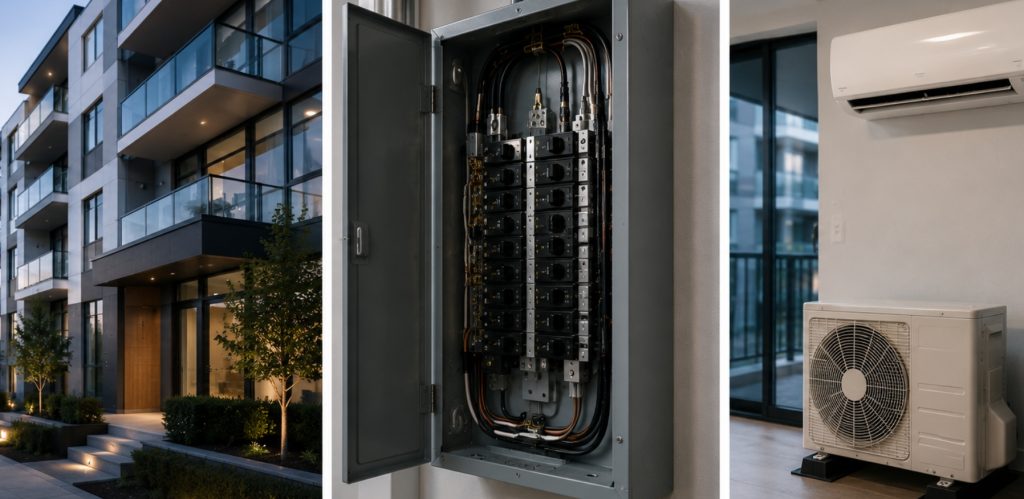
For condo owners, surge protection questions get a bit more complicated. In many buildings, the main electrical panel and shared infrastructure fall under building management or the condo corporation, which means whole-home protection at the panel level may need board approval or coordination with the building’s electrical contractor. Individual unit owners can still look at point-of-use protection for in-suite equipment like a ductless heat pump head, in-suite HVAC controls, or major appliances, even if panel-level protection isn’t something they can install independently.
Installation Considerations
Whole-home surge protection should be installed by a licensed electrician, not as a DIY project it involves working at the live electrical panel. A proper installation typically includes:
- An assessment of the panel’s condition, age, and available capacity
- Confirmation that the panel and grounding meet current code requirements
- Selection of a surge protection device sized appropriately for the home’s electrical service
- Testing after installation to confirm it’s functioning correctly
If your panel is older or has known issues, an electrician may flag panel upgrades as a related but separate conversation worth having at the same time.
A Complement to Maintenance, Not a Replacement for It
It’s worth being clear about what surge protection does and doesn’t do. It reduces the risk of voltage-related damage to control boards and electronics. It doesn’t replace regular HVAC maintenance, extend the mechanical life of motors and compressors, or prevent every possible cause of equipment failure. The two work well together: seasonal maintenance keeps the mechanical side of your system running efficiently, while surge protection addresses a specific electrical risk that maintenance visits don’t cover.
Getting an Assessment
Because the right setup depends on your panel’s age and capacity, the equipment you’re trying to protect, and your home’s electrical history, a whole-home surge protector isn’t really a one-size-fits-all product. A licensed electrician can walk through your panel, ask about anything unusual you’ve noticed (flickering lights, tripped breakers, prior storm damage), and recommend a setup sized to your actual home rather than a generic package.
If you’re not sure whether your home’s electrical panel and HVAC equipment could benefit from added surge protection, Empower Home Comfort can help assess your panel, your comfort systems, and your overall setup to recommend an approach that fits your home.
FAQ
Q: Does whole-home surge protection stop damage from a direct lightning strike?
It significantly reduces risk, but no surge protector can guarantee complete protection against a direct lightning strike, which can carry far more voltage than a device is rated to handle. It’s most effective against the smaller, more frequent surges from utility fluctuations and equipment cycling, and it can reduce the severity of damage even in a larger event.
Q: Do I still need power bars with surge protection if I have whole-home protection?
Many homeowners use both. Whole-home protection addresses the larger risk to hardwired equipment like your furnace and air conditioner, while point-of-use surge protectors add an extra layer for sensitive individual electronics like computers and TVs.
Q: How do I know if my electrical panel can support a whole-home surge protector?
An electrician needs to look at your panel’s age, condition, and available capacity to confirm it. If your panel is older or already near capacity, they may recommend addressing that first.
Q: Will surge protection void my HVAC equipment's warranty?
No — surge protection is an added layer of protection, not a modification to the HVAC equipment itself. If anything, reducing voltage-related stress on control boards works in favour of the equipment’s long-term reliability, though it’s still worth checking your specific manufacturer’s warranty terms for any electrical requirements.
Q:Can condo owners install whole-home surge protection?
It depends on the building. Panel-level protection is often managed by the condo corporation or building management, so it usually requires their coordination or approval. In-suite point-of-use protection is typically something individual owners can add on their own.
Q: How often do power surges actually happen in a typical home?
More often than most people realize. Small internal surges from appliances and HVAC equipment cycling are a routine part of how a home’s electrical system operates they’re just usually too minor to notice without monitoring equipment.