Posted on Leave a comment

Is Your Furnace Ready for Fall? Why August Is the Best Time to Book a Tune-Up

Furnace Tune-Up Checklist: Get Ready for Fall

Nobody thinks about their furnace in August — until the first cold night hits and it doesn’t turn on. That’s usually the moment homeowners across the GTA realize their heating system has been quietly waiting all summer, untouched since last winter, and now everyone else in the neighbourhood is calling for service at the same time.

Late summer is actually the smarter window. Booking a furnace tune-up before the seasonal rush means more appointment flexibility, more time for a technician to catch small issues while they’re still small, and a heating system that’s ready to go the moment you need it — instead of the moment it fails.

Quick take

A furnace tune-up is a professional inspection and cleaning of your furnace’s key components — filter, thermostat, burners, electrical connections, and safety systems — done once a year, ideally before the heating season starts. Booking in August or early September, before appointment calendars tighten, gives you a better shot at convenient scheduling and helps catch minor wear before it turns into a mid-winter no-heat call.

Why Book a Furnace Tune-Up Before Fall

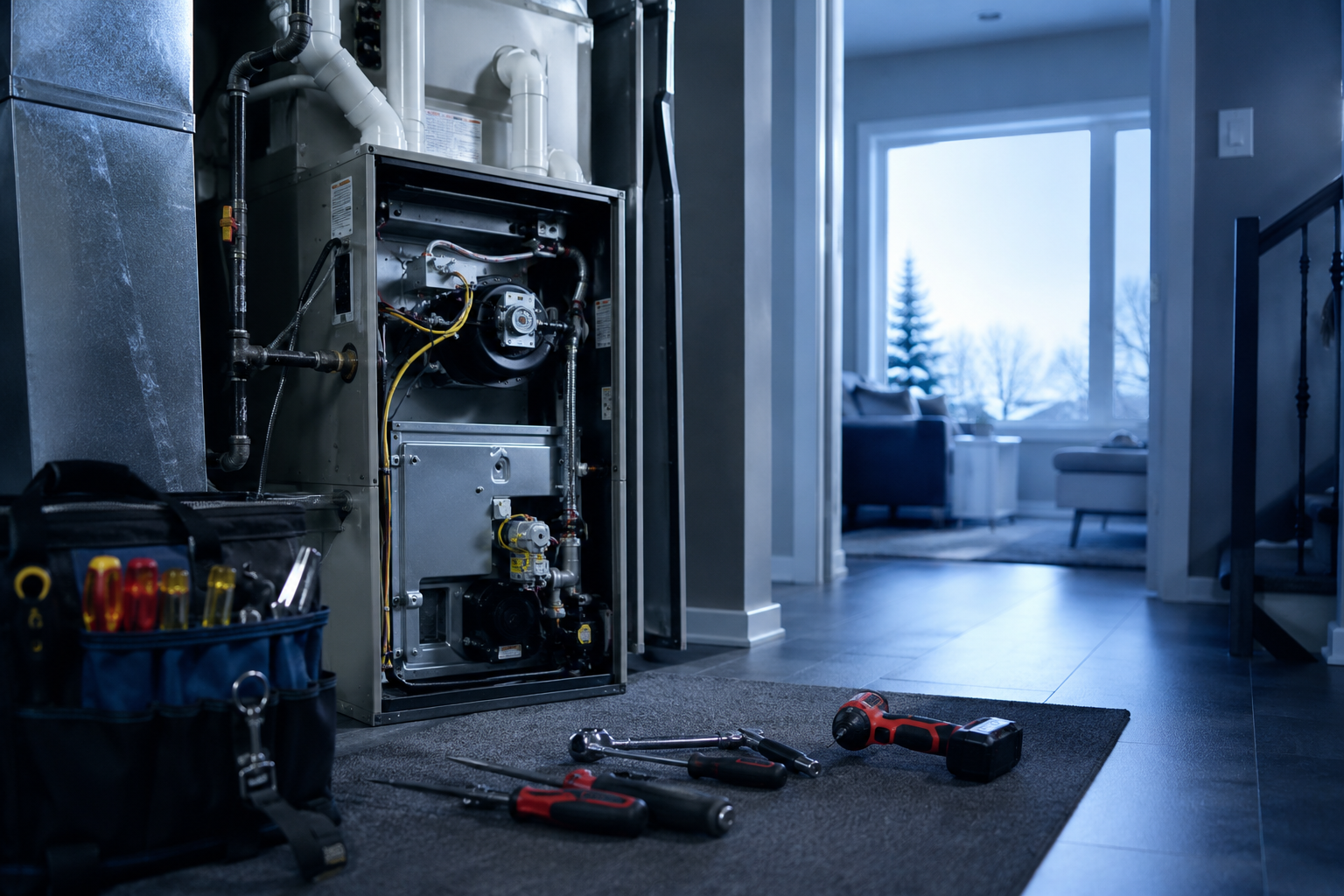
A furnace runs hard for months once the weather turns, often for the first time in half a year. A pre-season check gives a technician the chance to look at the system while there’s no pressure and no cold snap forcing a same-day repair.
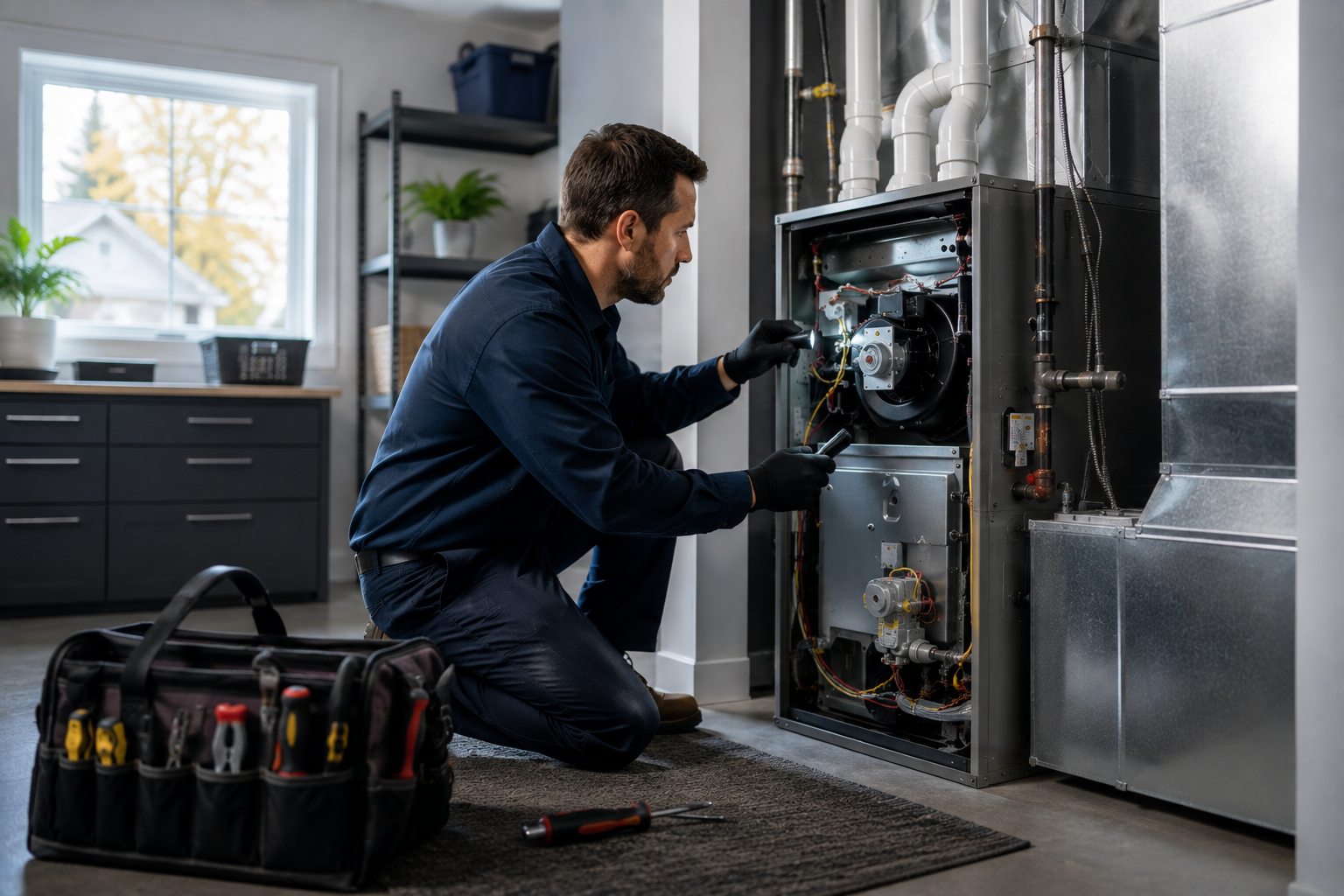
Professional Furnace Tune-Up

Safer operation. Furnaces burn fuel to produce heat, and part of a proper tune-up includes safety testing — including a check for carbon monoxide. This matters beyond good practice: Ontario’s Fire Code requires carbon monoxide alarms in any home with a fuel-burning appliance like a furnace, with expanded placement rules (near every sleeping area and on every storey) that took effect January 1, 2026.

Empower’s heating services team handles this kind of seasonal maintenance across Toronto and the GTA, alongside furnace repair and installation.

What’s Included in a Professional Furnace Tune-Up

A proper tune-up isn’t a quick filter swap — it’s a structured inspection of the parts most likely to affect comfort, efficiency, and safety over the winter. Empower’s furnace maintenance visits cover 23 individual checks, including:

  • Filter — inspected for buildup that can restrict airflow and strain the blower
  • Thermostat — checked for accurate readings and reliable response
  • Burners and flame sensor — inspected to keep heating performance consistent
  • Electrical connections and wiring — reviewed for secure, dependable operation
  • Carbon monoxide and safety systems — tested as part of every visit
  • Additional checks on the condensate drain and trap, hot surface igniter, gas piping, and a full heating-cycle test to confirm everything works together

For the complete 23-point checklist and what’s covered under an ongoing plan, see Empower’s furnace maintenance & protection plans.

Signs Your Furnace Needs Attention Before Winter

A tune-up is preventative, but it’s also a good moment to flag anything that’s already acting up. Watch for:

  • No air, or only cold air, coming from your vents
  • Banging, popping, or clanging noises when the system runs
  • A furnace that can’t quite bring the house up to a comfortable temperature
  • Stale air or noticeably more dust than usual
  • Energy bills that have crept up without an obvious reason

None of these guarantee a major problem, but they’re worth mentioning to your technician during a fall visit rather than waiting to see if they get worse mid-winter.

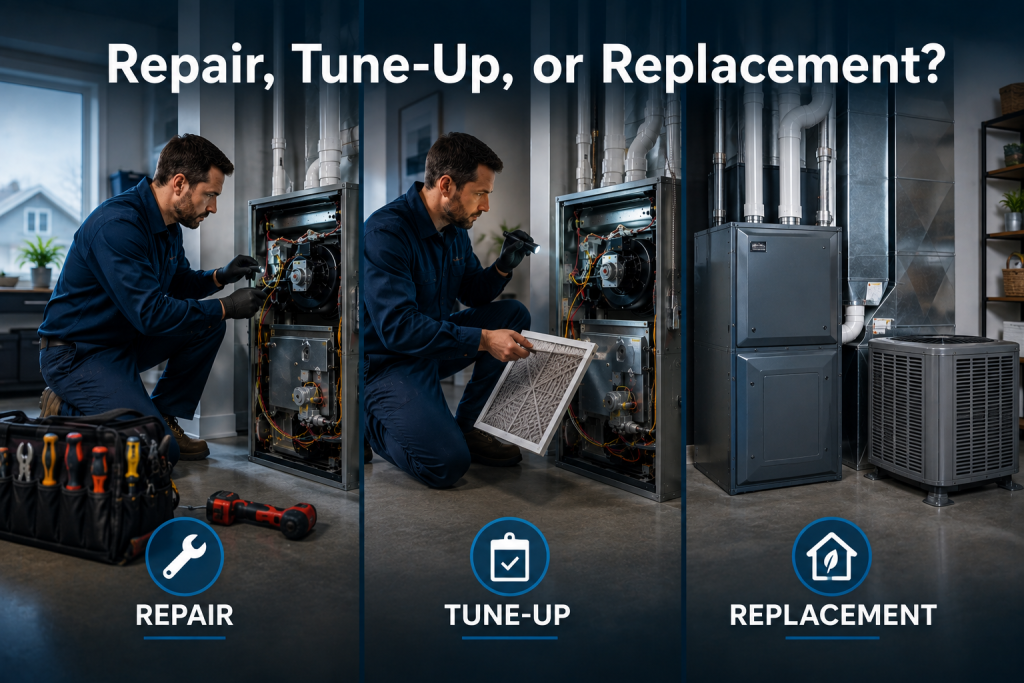
Repair, Tune-Up, or Replacement?

A tune-up is maintenance, not a repair — if something is already broken, it needs to be diagnosed and fixed on its own. Most of the time, a properly maintained furnace can be kept running well with routine service and the occasional repair. Furnace repair is generally the right call when a specific issue shows up, especially if the system is otherwise in good shape.

Replacement tends to make more sense when a furnace is older — Empower generally points to systems over 15 years old — or when a unit hasn’t been well maintained and is now costing more in repairs than a new system would cost outright. If you’re in that position, it’s worth looking at furnace replacement options and, if you’re upgrading equipment, checking current HVAC rebates and incentives and Empower’s guide on how to size a new furnace or AC so any replacement is sized correctly for your home.
One-Time Tune-Up or an Ongoing Protection Plan?

There are two ways to keep a furnace maintained, and which one fits depends on how you want to manage it.

A one-time tune-up — like the current August offer — is a single seasonal visit: book it, get the 23-point check done, and you’re set for the season.

An ongoing maintenance & protection plan builds that same annual service into a year-round membership, with plans starting from $12.99/month for a single system. Depending on the plan, that can also include unlimited no-charge service calls, discounts on repairs, and priority scheduling. It’s worth a look for homeowners who’d rather not think about re-booking every year. Full plan details are on Empower’s maintenance & protection plans page.

Why August Beats October

Furnace tune-ups aren’t seasonal by law, but demand is. Once the first genuinely cold week hits Toronto, Vaughan, Richmond Hill, Markham, and the rest of the GTA, HVAC companies — Empower included — see service calls jump, and routine maintenance appointments get harder to book on short notice. Getting ahead of that means:

  • More flexibility to pick a day and time that works for your schedule
  • More time for a technician to properly work through every item on the checklist, rather than rushing between emergency calls
  • A furnace that’s already confirmed ready before you actually need the heat

Frequently Asked Questions

What does a furnace tune-up include?

A full inspection and cleaning of the parts most likely to affect comfort, efficiency, and safety — including the filter, thermostat, burners, electrical connections, and a carbon monoxide/safety check. Empower’s visits cover 23 individual checks in total; see the maintenance & protection plans page for the full list.

Through September 30, Empower’s furnace tune-up is $119, discounted from the regular $249. For year-round coverage instead of a single seasonal visit, ongoing maintenance plans start from $12.99/month.

Most HVAC manufacturers and technicians recommend having a furnace professionally serviced once a year, ideally before the heating season begins. For system-specific guidance, see Empower’s HVAC FAQ library.

Late summer to early fall — before the first cold snap pushes everyone to book at once and appointment availability tightens.

No maintenance visit can guarantee a system won’t break down, but a tune-up is designed to catch the kind of wear and small issues that often lead to a mid-season no-heat call, before they become one.

Often, yes — keeping up with recommended maintenance can be part of what keeps a manufacturer’s labour warranty valid. Check your furnace’s product documentation or ask your technician for details specific to your system.
Posted on Leave a comment

Small Plumbing Problems Don’t Stay Small

small symptoms are usually the earliest

Small Plumbing Problems Don’t Stay Small

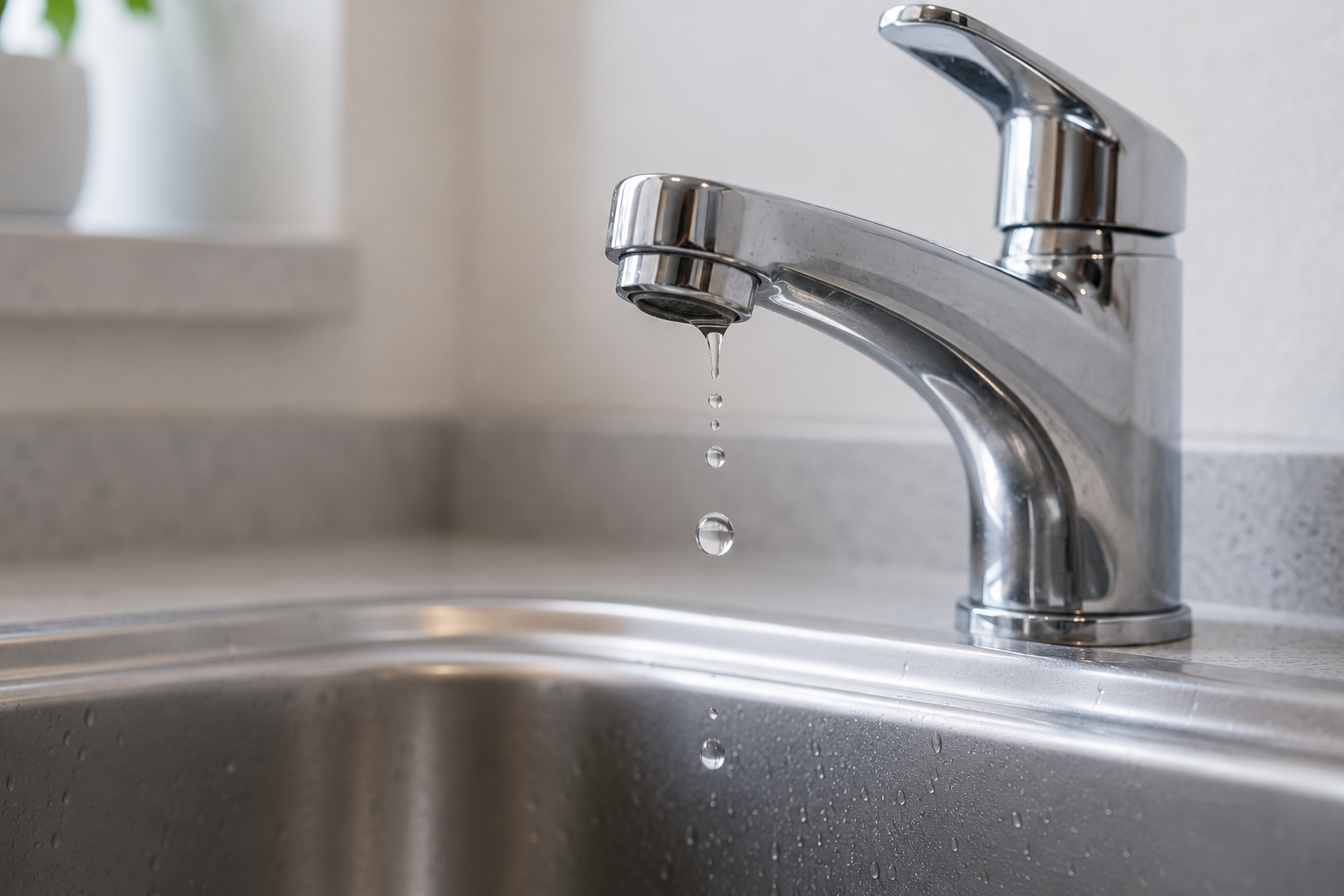
A slow drain or a tap that won’t fully shut off rarely feels urgent. It’s easy to put off, especially when the rest of the house seems fine. But plumbing systems tend to fail gradually, not suddenly — small symptoms are usually the earliest, cheapest point at which a problem can be caught, long before it becomes water damage, a spiked utility bill, or an after-hours emergency call.

Why Booking Sooner Pays Off

Why Booking Sooner Pays Off

A drip under the sink or a fixture that never quite shuts off can do more than raise your water bill. Left alone, slow leaks behind cabinets, worn seals, and pressure irregularities can spread moisture into drywall, flooring, or hidden framing before they’re ever noticed. Addressing these issues during a scheduled visit — rather than after they’ve escalated — also means less water wasted from running toilets and dripping fixtures, and a better chance of avoiding the higher cost and disruption that typically come with an emergency call versus routine service.

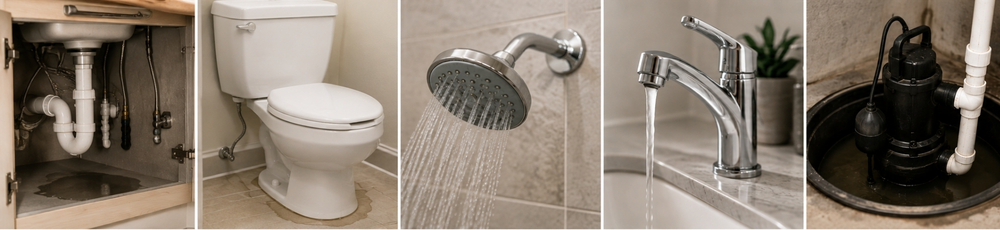
6 Household Plumbing Signs Worth a Second Look

These signs don’t confirm a specific fault on their own, but each one points toward a category of plumbing issue that’s far easier — and less expensive — to diagnose early.

1- Dripping or leaking taps. A tap that won’t fully shut off is almost always a worn washer, O-ring, or valve cartridge inside the fixture. It seems minor, but a constant drip adds up in wasted water over weeks and months, and often signals that other seals in the same fixture are due for attention.

2- Slow or clogged drains. A drain that empties sluggishly usually means a buildup of grease, hair, soap residue, or mineral scale narrowing the pipe. It tends to worsen gradually with normal daily use, which is why it’s easy to ignore until the drain stops altogether.

3- A toilet that keeps running or refilling. Hearing your toilet refill on its own with no one using it typically points to a worn flapper valve or fill valve letting water leak slowly into the bowl — one of the most overlooked sources of hidden water waste in a home.

4- Weak or changing water pressure. A drop in pressure at your taps or shower can be as simple as mineral buildup in an aerator, or it can point to a developing leak or a valve problem further back in the supply line. Sudden changes are worth checking sooner than gradual ones.

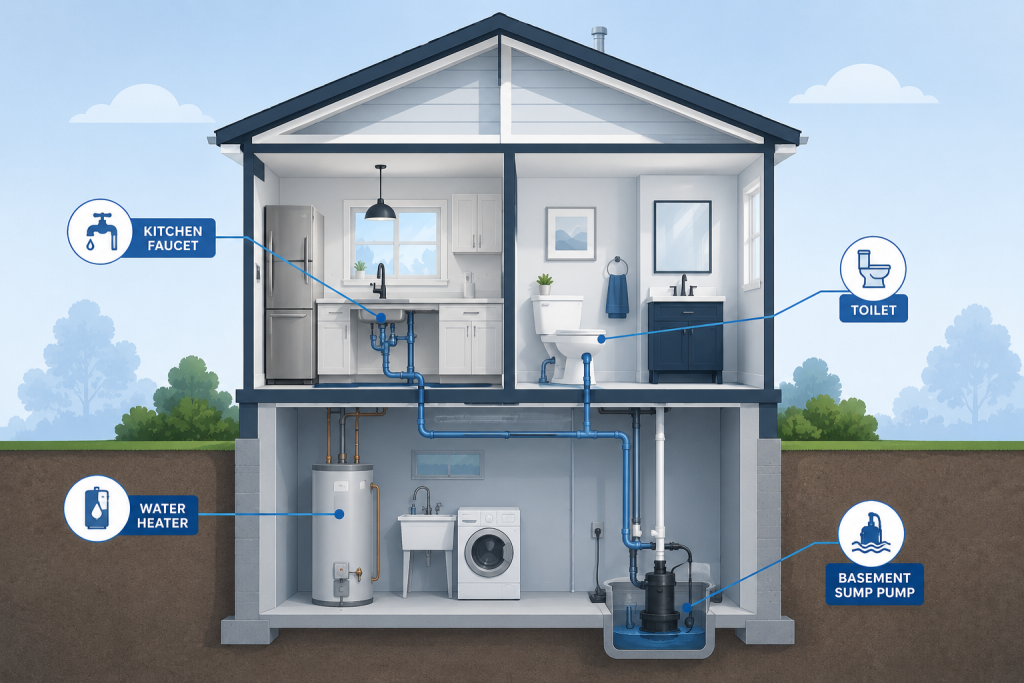
5- Inconsistent hot water. Hot water that fluctuates in temperature, runs out faster than it used to, or takes longer to arrive is commonly caused by sediment buildup at the bottom of the tank, a failing heating element or thermostat, or — in older units — a tank nearing the end of its service life.

6- Sump pump noises or unusual cycling. Grinding or rattling sounds typically point to worn bearings or a jammed impeller, while a pump that cycles on and off unusually often can indicate a float switch problem or a pump that’s undersized for the job. Either way, it’s worth checking before heavy rain or spring thaw puts real demand on the system.

A Simple Homeowner Prevention Checklist

Between service visits, a few habits make these signs easier to catch early: check under sinks and around toilet bases periodically for moisture or discolouration, listen for a toilet that runs a minute or more after flushing, note any gradual drop in shower or faucet pressure, keep an ear out for hot water that takes longer to arrive than it used to, and pay attention to unusual sounds from a sump pump — especially in spring and after heavy rain. None of these take more than a few minutes, and catching a pattern early is often the difference between a routine repair and a larger one.

Diagram of common plumbing warning sign locations in a home: faucet, toilet, water heater, and sump pump.

When to Monitor and When to Call a Professional

Minor, consistent symptoms  a slightly slow drain, a faucet that drips only occasionally  can often be monitored for a short period. But certain signs warrant a call sooner rather than later:

  • a toilet that continues running no matter what you try,
  • a sudden and unexplained drop in water pressure,
  • hot water that’s noticeably less reliable than before, unusual sump pump noises,
  • or any sign of moisture on walls, ceilings, or flooring.

In these cases, a licensed plumber can diagnose the actual cause rather than leaving it to guesswork.

Empower Home Comfort licensed technician

Why Licensed, Professional Service Matters

Every visit from Empower Home Comfort is handled by a licensed technician focused on clear answers and practical repairs — not upselling. That matters because plumbing symptoms can share causes that look similar on the surface but require very different fixes. A professional assessment protects both your home and your budget by identifying the actual source of the issue the first time.

FAQ

Is a slightly slow drain really worth calling someone about?

A drain that empties slowly is often an early sign of buildup that’s easier to clear before it becomes a full clog — it’s worth a look, even if it’s not urgent yet.

This is usually caused by a worn flapper or fill valve allowing water to slowly leak into the bowl, which can waste a meaningful amount of water over time even though it seems minor.

Occasionally it’s just a clogged aerator, but a sudden or ongoing drop in pressure can also point to a developing leak or valve issue, so it’s worth having it checked rather than assuming it will resolve on its own.

Not necessarily an emergency, but new grinding, rattling, or constant cycling sounds are worth having assessed soon, especially before a heavy rain event puts more demand on the system.

A licensed technician assesses the specific symptoms you’ve noticed, identifies the underlying cause, and recommends only the repair that’s actually needed — with clear communication throughout.

Posted on Leave a comment

Why Is Your Upstairs Always Hotter Than the Rest of the House? (And How to Actually Fix It)

Hot upstairs bedroom with ductless mini-split AC

Why Is Your Upstairs Always Hotter Than the Rest of the House?

If you’ve ever walked from a cool, comfortable living room straight into a stuffy upstairs hallway, you already know the feeling: your air conditioner is running, your thermostat looks fine, and yet your bedroom feels like a different climate zone entirely. It’s one of the most common comfort complaints in two-storey homes across the GTA, and it’s rarely caused by just one thing.

The good news is that this isn’t a mystery, and it isn’t something you have to live with. Once you understand what’s actually driving the imbalance, you can separate the free fixes worth trying this weekend from the upgrades that genuinely solve the problem for good.

It’s Not Just You:

Why This Happens in Almost Every Two-Storey Home?

A warmer upstairs is so common in multi-level homes that HVAC professionals consider it close to the default state, not the exception. It shows up most in homes with a single thermostat on the main floor, a single central HVAC system serving both levels, and an attic that absorbs significant heat through the roof. Toronto and GTA housing stock — from older brick two-storeys in Etobicoke and Scarborough to newer builds in Vaughan and Markham — checks most of these boxes, which is why the complaint is so widespread locally.

That said, “common” doesn’t mean “untreatable.” The imbalance sits on a spectrum: a few degrees of difference is normal physics, but a 6–10°F gap that makes a bedroom genuinely uncomfortable usually points to one or more fixable issues layered on top of that baseline physics.

The Real Causes of a Hotter Upstairs

Heat rise and the stack effect. Warm air is less dense than cool air, so it naturally rises and settles at the highest point it can reach — your second floor. Meanwhile, the cooled air your air conditioner produces sinks toward the main and lower levels. This “stack effect” alone can account for a noticeable baseline temperature gap between floors, even in a perfectly functioning HVAC system.

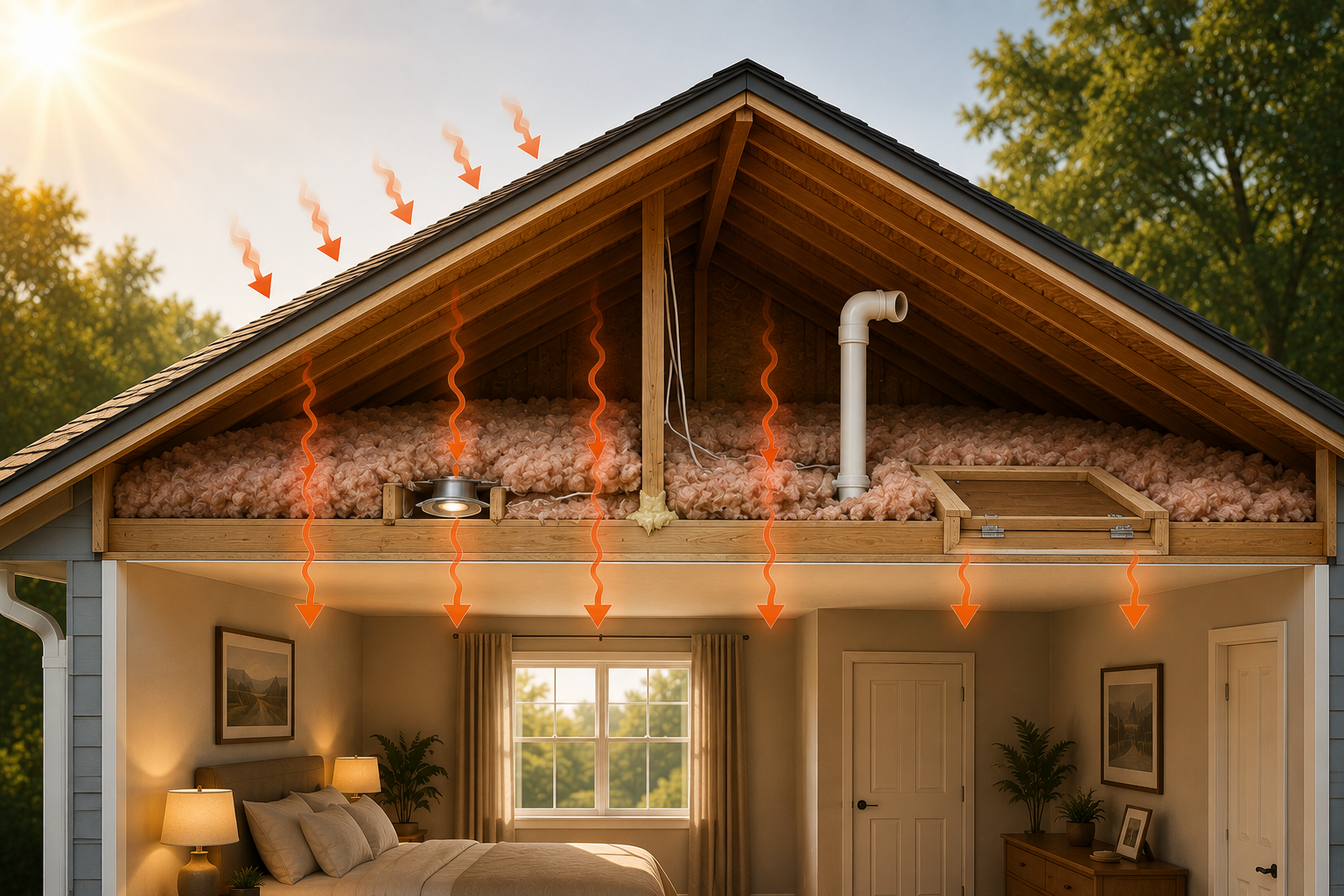
Attic heat gain and insulation gaps.
Your roof absorbs direct solar heat throughout the day, and that heat radiates downward through the attic floor into the rooms below it. If attic insulation is thin, unevenly distributed, or compromised by air leaks around light fixtures, plumbing stacks, or the attic hatch, that heat transfers into your upstairs ceilings far more efficiently than it should. Natural Resources Canada’s home retrofit guidance specifically flags air sealing — not just insulation depth — as essential, since gaps around penetrations can undermine even well-insulated attics.

Single Thermostat, Single Zone.
Most homes run one thermostat, usually mounted downstairs, controlling one HVAC system for the entire house. Once the main floor reaches the target temperature, the system shuts off — even if your upstairs bedrooms haven’t caught up yet. The thermostat simply has no way to “see” that the second floor is still warm.

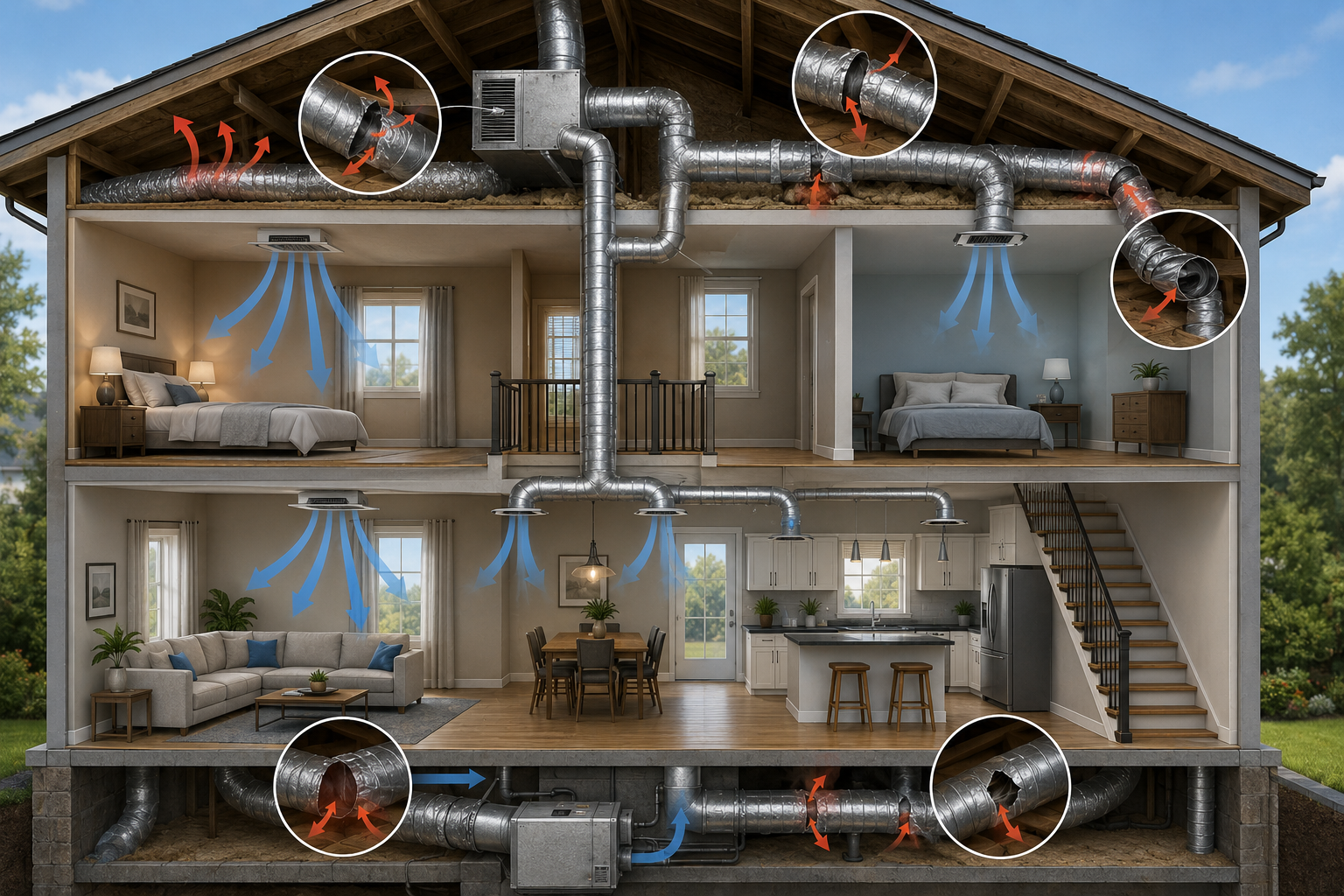
Ductwork imbalances and leaks.

Ductwork is the delivery system for your conditioned air, and it’s rarely perfect. Long duct runs to the second floor, undersized supply ducts, poor connections, or leaks along the way all reduce how much cooled air actually reaches upstairs rooms relative to what leaves your furnace or air handler. In older homes, ducts sized decades ago for a different system are a frequent, overlooked culprit.

Sun exposure and room-specific factors.

West- and south-facing upstairs rooms, rooms above garages, rooms with large or poorly sealed windows, and bonus rooms at the end of a long duct run tend to run hotter than the rest of the house regardless of what the HVAC system is doing. These factors compound the structural issues above rather than replacing them.

Does This Reverse in Winter?

Interestingly, many GTA homeowners notice the opposite pattern in winter: the upstairs can feel colder than the main floor, especially in bedrooms far from the furnace or with weaker duct runs. This happens because forced-air heating relies on the same imperfect duct network, but now warm air also naturally wants to rise and can overheat the top floor while leaving distant rooms shortchanged — depending on your specific duct layout, the imbalance can go either way. If your seasonal pattern flips between “hot upstairs in summer” and “cold upstairs in winter,” that’s a strong sign the root cause is airflow and duct balance rather than sun exposure alone, since sun exposure wouldn’t explain a winter reversal.

Free and Low-Cost Fixes to Try This Week

Before booking a service call, a handful of no-cost or low-cost adjustments are worth trying first:

When the Problem Needs a Professional

If you’ve tried the fixes above for a week or two and the gap between floors is still significant — generally more than about 5°F once you’ve ruled out the easy stuff — it’s a sign the issue lives in your ductwork, your attic insulation, your system’s capacity, or your zoning setup rather than anything you can adjust from inside the house. It’s also worth a professional look if the imbalance has gotten noticeably worse over time, if your system is running constantly without catching up, or if you’re planning a renovation that touches the attic or ductwork anyway.

Long-Term Fixes That Actually Solve It

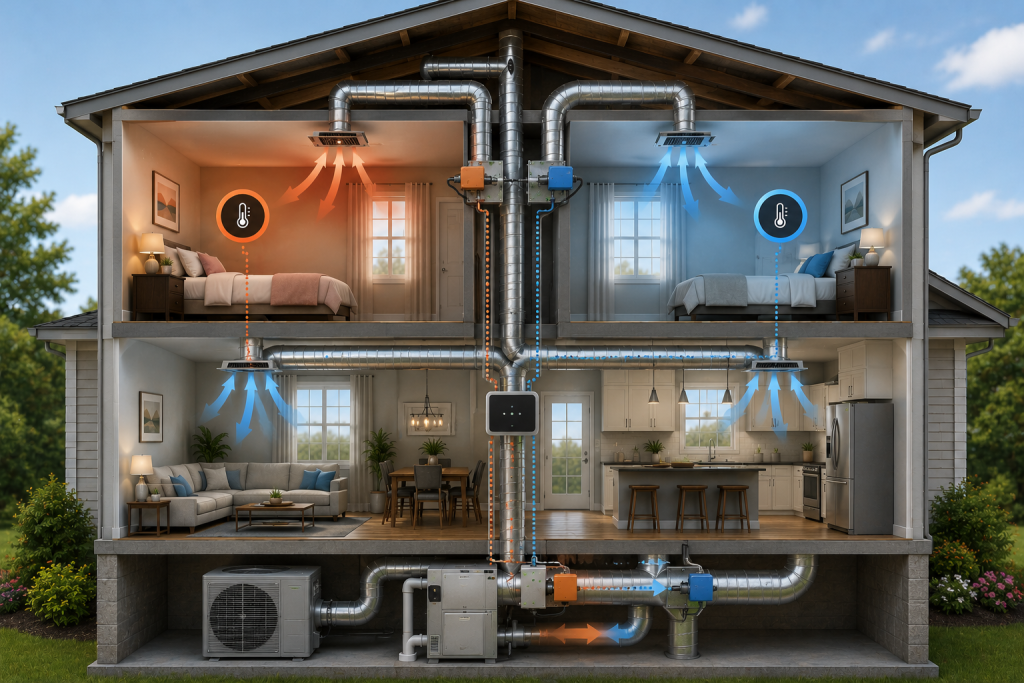
Zoned heating and cooling. A zoning system divides your home into independently controlled areas — typically upstairs and downstairs — using motorized dampers and multiple thermostats or sensors tied to one central system. This lets each level reach its own target temperature instead of both being held hostage to a single downstairs reading.

Zoned heating and cooling

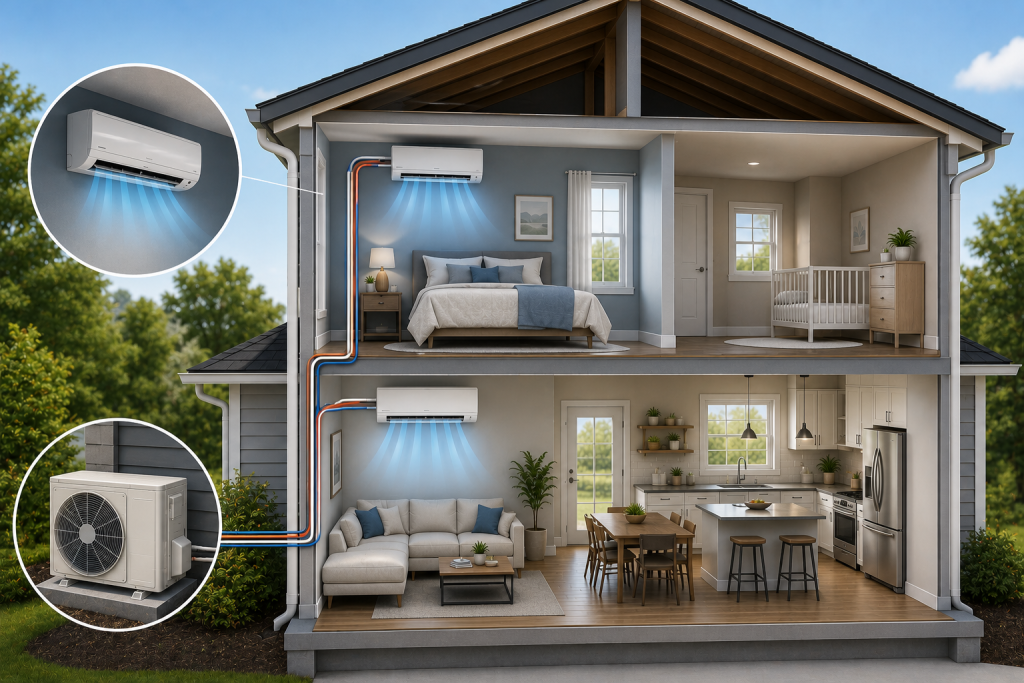
Ductless mini-split systems

For homes where redoing ductwork isn’t practical, a ductless heat pump delivers cooling (and heating) directly to the room or zone that struggles most, without relying on the existing duct network at all. This is often the most cost-effective fix for one or two consistently hot upstairs bedrooms, bonus rooms over garages, or finished attic spaces — and it’s a system Empower installs as part of its cooling and heat pump services.

Ductless mini-split systems

Duct sealing, balancing, or replacement. If an inspection reveals leaky, undersized, or poorly routed ducts feeding your second floor, sealing and rebalancing the existing system — or replacing problem sections — can meaningfully improve how much conditioned air actually reaches upstairs rooms.

Attic air sealing and insulation upgrades. Addressing air leaks around penetrations and topping up attic insulation to the levels recommended for your climate zone reduces how much roof heat transfers into your upstairs ceilings in the first place, complementing whatever HVAC fix you choose. This work is outside Empower’s direct service scope, but it’s worth pairing with a qualified insulation contractor alongside any HVAC changes.

A right-sized, higher-efficiency system. If your current furnace, AC, or heat pump is aging or was undersized for the home from the start, an upgrade — often paired with the rebates currently available on qualifying heat pump installations — can resolve capacity issues that no amount of duct or zoning work can fix on its own.

What a Professional Assessment From Empower Looks Like

A proper diagnosis starts with understanding your specific home, not guessing. Empower’s technicians assess your existing ductwork, thermostat setup, and system capacity, and give you a straight answer about whether the fix is a simple adjustment, a duct repair, a zoning retrofit, or a ductless addition — consistent with the company’s stated approach of recommending only what’s actually necessary rather than upselling. If a heat pump or ductless system turns out to be the right long-term answer, current rebate programs can offset a meaningful portion of the cost.

Common Mistakes Homeowners Make

Closing downstairs vents completely to force air upstairs is one of the most frequent mistakes — it can restrict airflow enough to strain the blower motor and, in some systems, contribute to a frozen evaporator coil. Buying a bigger air conditioner without addressing ductwork or zoning is another: oversized equipment can short-cycle, cool unevenly, and remove less humidity, sometimes making comfort worse rather than better. Assuming the fix must be expensive is also a mistake — many households see real improvement from the free adjustments alone, and only need professional help for the remaining gap.

A hotter upstairs is one of the most common comfort issues in two-storey GTA homes, and it’s driven by a predictable mix of physics, attic heat gain, single-zone thermostats, and ductwork limitations — not a mysterious defect in your system. Start with the free fixes, track whether they close the gap, and if a meaningful difference remains, a professional assessment can tell you exactly which upgrade — zoning, a ductless system, duct repair, or something simpler — will actually solve it for your specific home.

❄️ Ductless Cooling FAQ: Fixing a Hot Upstairs

Q: Why is the upstairs of my house always hotter than downstairs?

Heat naturally rises, and a single central thermostat can only read one zone of your home — so upper floors almost always run warmer, no matter how low you set the temperature. A ductless mini-split fixes this by giving upstairs rooms their own dedicated cooling, independent of the rest of the house.

Yes. Because a ductless unit cools the specific room or zone it’s installed in, it doesn’t rely on ductwork or airflow balancing to reach the upstairs. That means faster, more consistent cooling exactly where the heat builds up most.


No. Ductless mini-splits are typically added alongside your existing furnace or central air system. They target the specific rooms causing discomfort, so you’re not paying to replace equipment that’s already working fine downstairs.

Many homeowners see savings because they’re no longer overcooling comfortable rooms just to bring the temperature down upstairs. Zoned, room-by-room control lets you cool only the spaces being used.

Ductless indoor units are designed to run quietly, which is one of the main reasons homeowners install them in bedrooms — for cooling that doesn’t disrupt sleep.


The best way to know is a proper on-site assessment. Empower Home Comfort offers a free, no-obligation consultation to evaluate your upstairs heat issue and recommend the right setup for your home.